Warsh Briefing – Fed and Interest Rates Rise
Federal Reserve’s July 2026 Policy Update: Balancing Inflation Control and Economic Strength
Listen:
- mediaBrew Media Player: ( 28 Min. mp3)
- Default Device Player: ( 28 Min. mp3)
Summary
The Federal Open Market Committee (FOMC) raised the federal funds rate by 0.25 percentage points to a target range of 3.75%–4.00%, reflecting a cautious but firm step toward achieving price stability amid a strengthening U.S. economy. The move aligns with the Federal Reserve’s dual mandate of promoting maximum employment and stable prices. Recent data indicate solid economic expansion driven by resilient consumer spending, robust capital investment, and sustained job growth, with the unemployment rate stable near 4.1%. Despite this economic resilience and broad optimism within the Committee, inflation remains persistently elevated — too high and too prolonged relative to the 2% PCE inflation target.
The FOMC expressed unwavering commitment to returning inflation to the 2% objective in a timely manner, recognizing inflationary pressures stem partly from persistent price increases across many categories and rising commodity prices. The Committee removed some monetary accommodation, acknowledging that financial conditions remain accommodative rather than restrictive. The decision was unanimous, reflecting a balance between continuing economic momentum and the urgency to contain inflation to prevent broader second-round effects.
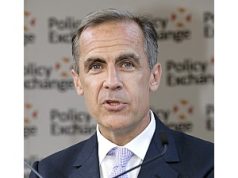
Projections from FOMC participants estimate real GDP growth around 2.3–2.4% for 2026 and 2027, inflation decelerating from 3.7% this year to 2.3% next year, and unemployment steady near 4.1%. Risks to inflation remain tilted to the upside, while labor market risks are roughly balanced. The Fed Chair emphasized a principle-driven approach rather than data-point dependence, focusing on sustained trends rather than short-term fluctuations. He reaffirmed the Fed’s commitment to independence and responsibility for price stability and full employment, while leaving policy maneuvering judicious and adaptive to evolving economic and geopolitical conditions.
The Chair also addressed questions about the Fed’s limited influence over supply-driven inflation components, interactions with market expectations, the global policy environment, AI’s economic impact, and the broader social implications of monetary policy, particularly for lower-income Americans. The overarching message was that while monetary policy cannot target individual prices, it aims to prevent inflation from broadening and destabilizing the economy, thereby supporting durable economic growth and equitable gains.
Highlights
- 🔺 The Fed raised the federal funds rate by 25 basis points to 3.75%–4.00%, signaling a reduction of monetary accommodation.
- 📈 Economic activity is expanding solidly with robust job gains and resilient consumer spending.
- ⚠️ Inflation remains elevated with core PCE inflation above 3%, necessitating continued policy vigilance.
- 💼 Labor market indicators signal full employment, with unemployment stable near 4.1% and job openings increasing.
- 🌍 Geopolitical uncertainties persist but have not undermined overall economic resilience.
- 📉 FOMC projections foresee inflation declining to near 2.3% by next year, with GDP growing steadily.
- 🔄 The Fed adopts a disciplined, trend-focused approach rather than reacting to individual data points.
Key Insights
🔥 Persistent Inflation Challenges Demand Gradual Rate Hikes
Inflation has remained above target for over five years, with recent data showing no meaningful improvement in underlying trends. Despite strength in the economy, inflation is broad-based, rising above 3% in many categories on both a 6- and 12-month basis, reflecting persistent pressures that simple supply shocks (energy, tariffs) cannot resolve quickly. The Fed’s quarter-point hike constitutes a calibrated step to remove accommodation and prevent inflation from becoming entrenched, signaling that the committee is more concerned with the broader inflation dynamic than isolated price changes.💪 Resilient Labor Market Supports Fed’s Price Stability Focus
Employment data show a healthy labor market with job growth keeping pace with workforce expansion, stable unemployment claims, and increasing weekly hours. The Fed judges labor market slack to be minimal and consistent with full employment, implying that reducing inflation need not necessarily come at the expense of worsening employment. This balance enables the Fed to emphasize price stability without deliberately inducing significant labor market weakness.🌍 Geopolitical Developments Add Uncertainty but Not Disruption
The Chair highlighted heightened geopolitical risks with hot spots around the world but also noted the U.S. economy’s resilience against these shocks. Credit flows and business investment remain robust despite uncertainties. The Fed’s decision to tighten policy reflects confidence that the external environment is a risk factor to monitor without overshadowing domestic economic fundamentals.📊 Trend-Over-Data Philosophy Guides Policy Decisions
The Fed Chair distanced the Committee from “data-point dependence,” emphasizing that single economic releases (e.g., CPI, retail sales) are noisy and should not drive policy alone. Instead, the FOMC looks for consistent signals and trends that demonstrate inflation is moving clearly and swiftly toward 2%. This strategic patience allows the Fed to avoid overreacting to short-term volatility while maintaining commitment to its inflation objective.🌐 Fed Policy Interactions with Global Central Banks
The Chair acknowledged that other advanced economies face similar inflation pressures and are responding with their own rate hikes as mandated. While the Fed does not dictate foreign central bank moves, there are spillover effects in both directions through financial markets and trade. Global coordination is implicit, but policymaking remains differentiated by each economy’s context.🤖 Artificial Intelligence’s Economic Implications Are Under Study
While AI presents transformative opportunities and risks, the Chair underscored that monetary policy is primarily concerned with its economic impact rather than direct regulation. The Fed has established a task force to analyze AI’s influence on demand and supply dynamics, preparing for future policy considerations. Political and regulatory decisions around AI remain the jurisdiction of other government bodies.⚖️ Monetary Policy’s Distributional Effects and Social Context
The Chair reflected on the impact of inflation and rates on lower-income Americans, who often lack financial assets and rely on wages. Stable prices improve real income and economic security for these groups, highlighting why achieving the inflation target is a critical social as well as economic goal. While rate hikes may increase borrowing costs, the longer-term benefit is safeguarding purchasing power and enabling sustained economic opportunity.
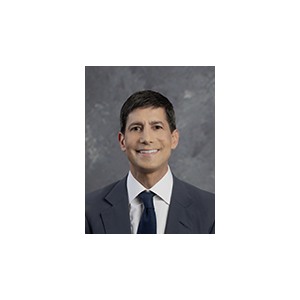
Kevin Warsh
After leaving the Board in 2011, Mr. Warsh was the Shepard Family Distinguished Visiting Fellow in Economics at Stanford University’s Hoover Institution and a lecturer at the Stanford Graduate School of Business. He was also a partner at Duquesne Family Office.
Mr. Warsh served as special assistant to the president for economic policy and as executive secretary of the National Economic Council from 2002 until 2006. During that time, he was also a member of the President’s Working Group on Financial Markets.
From 1995 to 2002, Mr. Warsh worked at Morgan Stanley as vice president and executive director.
He received an AB from Stanford University in 1992 and a JD from Harvard Law School in 1995.
This policy update reflects the Fed’s balancing act amid a complex economic landscape—acting firmly on inflation without prematurely disrupting growth or labor markets, remaining data-informed but trend-focused, and maintaining independence amid global uncertainties and technological change.
Kevin Warsh took office as chairman of the Board of Governors of the Federal Reserve System on May 22, 2026, for a four-year term ending on May 21, 2030. Mr. Warsh also serves as chairman of the Federal Open Market Committee, the Federal Reserve System’s principal monetary policymaking body. Additionally, he is a member of the Board of Governors, with his term ending on January 31, 2040. He was previously a member of the Board of Governors from 2006 to 2011.
- The 8th Day – Airs Sundays 6:00a - 7:00a on Marquette County's Sunny 101.9 & online http://8thday.buzz
- The show also Airs Sundays 6:00a - 7:00a on WFXD.com, Fox Sports Marquette 105.1/Gwinn 99.9, GTO.FM 97.5 FM, and WRUP 98.3
- A mediaBrew Communications Community News Partner
- Most content from State and National News is broadcast/posted unedited, without bias or favor to content
- While our show airs speeches (usually unedited), debates, bona fide news interviews or scheduled newscasts, news of local and state and national interest, or an on-the-spot news event, we still welcome alternative points of view, and we encourage those with other points-of-view to write mediaBrew Communications Llc. 3060 US 41 West, Marquette, Michigan 49855 about interviews or similar content we may have previously aired, or to report legitimate news tips.